





In Motion is our transformative 18-month artist development programme for original music creators at pivotal points in their careers. We support music creators to design and embark on the next chapter of their creative and professional journey, providing the space, personalised support, funding, networks and skills development to realise their ambitions, culminating in a final creative project for public release.
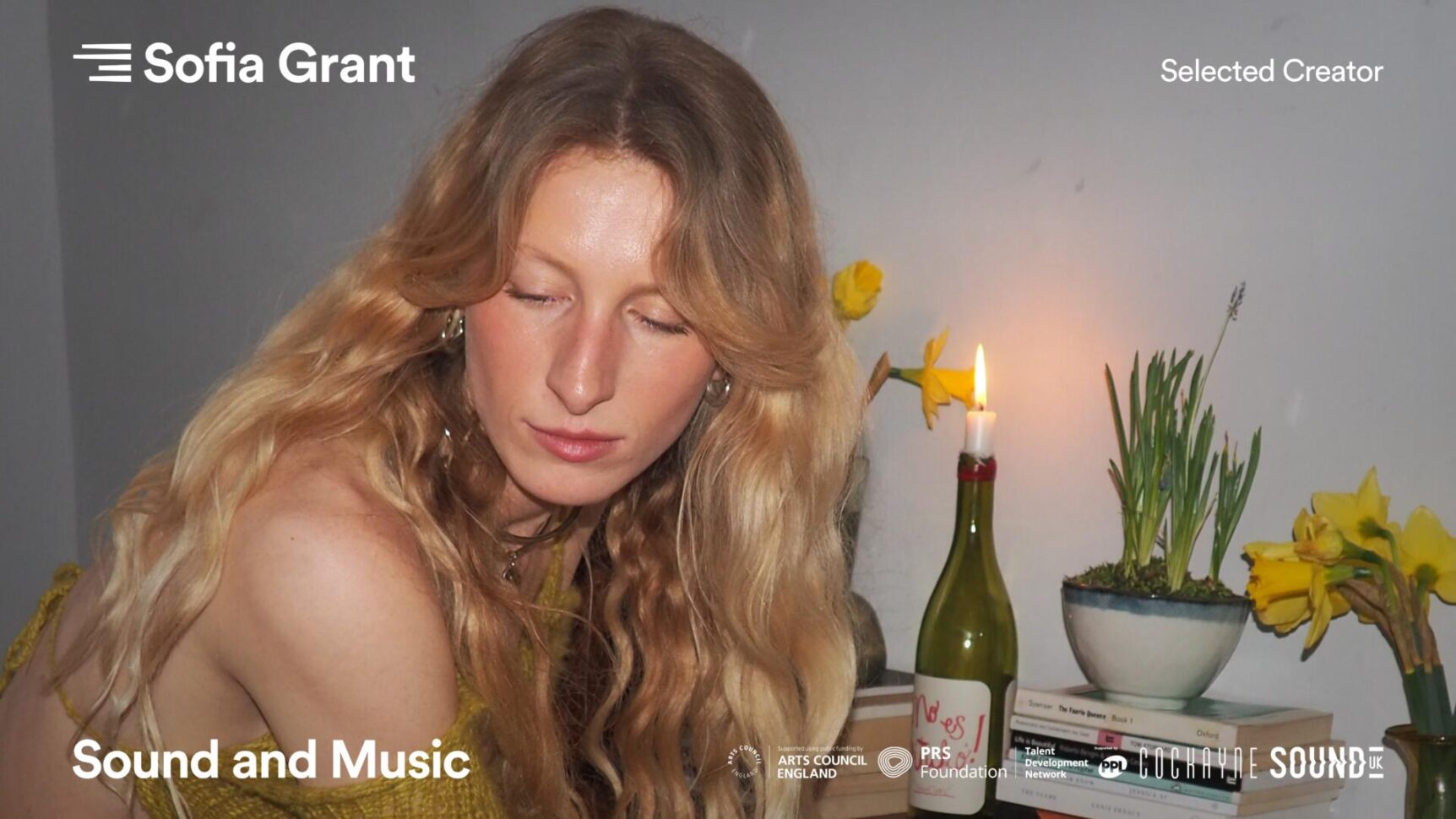
In this Q&A, we speak to In Motion 2026 creator Sofia Grant, a rising star on the UK jazz scene, she writes about our relationship with the natural world. Lyrically bold and vocally dextrous, her songs about permafrost, species decline and degradation of mountains place her at the cutting edge of climate and sound. Her record Extinction released on the iconic Jazz re:freshed label has been critically acclaimed, championed by UK giants such as Gilles Peterson, Jamz Supernova, Jamie Cullum on BBC Radio and Jazz FM.
WONDERLAND Magazine named Sofia a “searing talent”, “musically progressive and thematically explorative” in her work, whilst Ezra Collective’s Femi Koleoso (BBC Radio 6 Music) said: “really excited about this record by Sofia Grant and really excited to see what she gets up to next.”
Are there any particular themes, ideas or questions that you find yourself returning to in your work?
My artistic practice is about the relationship between people and place – which is too often positioned as ‘man vs. nature’ as though we aren’t a part of the natural environment ourselves. Regardless of what I’m try to write about, I always return to the idea espoused in deep ecology of the intrinsic value and connectedness of all living things. I suppose I’m trying to build a new synapse in that connected web every time I write a song. The project I will be working on during the programme explores how music can function as a connective tissue rather than a finished statement or a depiction.
“My artistic practice is about the relationship between people and place – which is too often positioned as ‘man vs. nature’ as though we aren’t a part of the natural environment ourselves.”
Do you have any rituals or routines that help you get into a creative flow?
I am a daily meditator, and that practice is essential for me to cultivate a spaciousness and graciousness in the face of a lot of violence and injustice in the world today. Other than that, my work is heavily research-based. For my last project, I spent many many hours reading about the formation of mountains, the melting of permafrost and the Colorado River. As someone with an environmental background, putting in the work to understand the ecological basis of what I’m writing about always sparks my best ideas.
What’s your relationship with improvisation, and how does it shape your work?
I founded a jam session called Higher Ground almost ten years ago which has brought so much joy and creativity. So improvisation is at the core of my creative process. I love ‘working into’ an idea through free play rather than waiting for inspiration to strike. My upcoming album was composed around a series of improvised stories about how I have healed through nature. We need more spaces that are set up with experimentation and play in mind, rather than the delivery of artistic products.
“I love ‘working into’ an idea through free play rather than waiting for inspiration to strike. My upcoming album was composed around a series of improvised stories about how I have healed through nature.”
What does collaboration mean to you, and how do you approach working with others?
The work we make isn’t really made by us. It’s formed outside of us in the spaces between us, our collaborators and the places where we create. In that sense it is always more than the sum of its parts.
So my collaborative relationships are extremely important to me and something I approach with intention and care. My band is made up of close friends, I write with their musical voices in mind and am always humbled by how powerful their interpretations of my music are.
In that sense the collaboration isn’t just about time in the studio, it’s the teas you make for each other, the questions you ask about their parents and the way you hold each other in challenging moments. I’m blessed with exceptional collaborators.
“I am really looking forward to a focus on process, architecture and how we make rather than what. That feels like a real privilege. Being an artist can be a solitary path so I am also really drawn to the experience of being in a cohort of artists that are rewiring their artistry in parallel.”
What are you looking forward to most about In Motion?
I’m used to working towards outputs, whether that’s releases, performances or production deadlines. I am really looking forward to a focus on process, architecture and how we make rather than what. That feels like a real privilege.
Being an artist can be a solitary path so I am also really drawn to the experience of being in a cohort of artists that are rewiring their artistry in parallel.

Sound and Music is a PRS Foundation Talent Development Network Partner supported by PPL.
In Motion 2026 is made possible with the generous support of Arts Council England. PRS Foundation, The Cockayne Foundation and Sound UK.
Learn more about Sofia Grant
Meet the In Motion 2026 creators
Learn more about In Motion